


 Hotline Call Centre: 1500 674 (MSI)
Did You Know? - A Notice of Claim to Carrier Is Essential in the Marine Cargo Insurance Claim Process
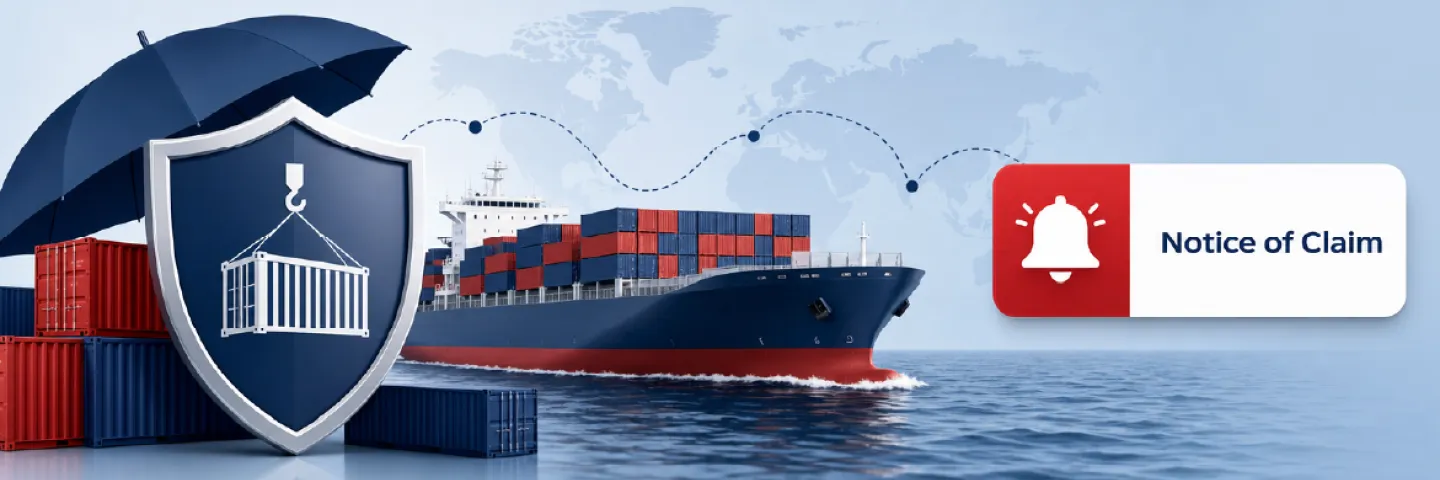
In the practice of Marine Cargo Insurance, one of the key steps, which is sometimes viewed merely as an administrative formality but has significant legal implications, is the submission of a Notice of Claim to the Carrier. Although it is often regarded as an administrative process, it has a crucial role in protecting the legal rights of both the Insured and the Insurer, as well as the right to recovery.
Notice of Claim to Carrier
A Notice of Claim to the Carrier is an official notification from the owner of the goods (Consignee/Insured) to the carrier regarding damage, loss, or theft of the goods during the transportation process.
Why is a Notice of Claim to the Carrier Important?
- Preserving Rights of Claims Against the Carrier. In international carriage contracts such as the Hague-Visby Rule, Hamburg Rules, or the Montréal Convention, there are quite strict time limits for Notice of Claims to the Carrier. If a Notice of Claim to the Carrier is not submitted on time, then:
- The right to sue the carrier may be lost;
- The carrier may consider the goods to have been received in good condition.
- Supports the Insurance Subrogation Process. In the Marine Cargo Insurance process, after a claim has been paid to the Insured, the insurance company has the right to proceed with subrogation (assuming the Insured’s right to pursue a third party, in this case the carrier). If the absence of a Notice of Claim to the Carrier:
- The right of subrogation may be lost or weakened;
- The insurance company may not be able to recover the loss.
- Preliminary Proof of Loss. This notice serves as proof that the damage occurred during the period of carriage and that the carrier has been officially notified. This is important to avoid disputes regarding when and where the damage occurred.
When Should the Notice of Claim Be Sent to the Carrier?
The time limit for submitting a Notice of Claim to the Carrier depends on the mode of transportation and applicable legal provisions, including:
- Sea Carrier
- Apparent damage: At the time of delivery or prior to delivery.
- Non-apparent damage: This inspection is typically conducted 3 days after the goods are received.
- Air Carrier. In accordance with the Montréal Convention:
- A maximum of 14 days for damage to goods.
- A maximum of 21 days for delays to goods.
- Calculated from the date the goods were received.
- Land Carrier. May be subject to local laws or the terms of the contract.
A Notice of Claim to the Carrier is not just an administrative procedure, but a strategic step in the protection of legal and financial rights, particularly in the Marine Cargo Insurance process. Timeliness and complete documentation are key to ensuring that the claims and recovery process run smoothly.
As a best practice, notifications should be sent as soon as possible after the damage is detected, accompanied by adequate documentation. Compliance with this process is crucial to the success of the claims and recovery process.
Hopefully, the information above enriches your understanding of a Notice of Claim to Carrier that is essential in the Marine Cargo Insurance claim process. For more information about MSIG Indonesia’s insurance products, please visit our official website at www.msig.co.id or call our contact center at 1500 674 (MSI) to find comprehensive information and interactive services.